
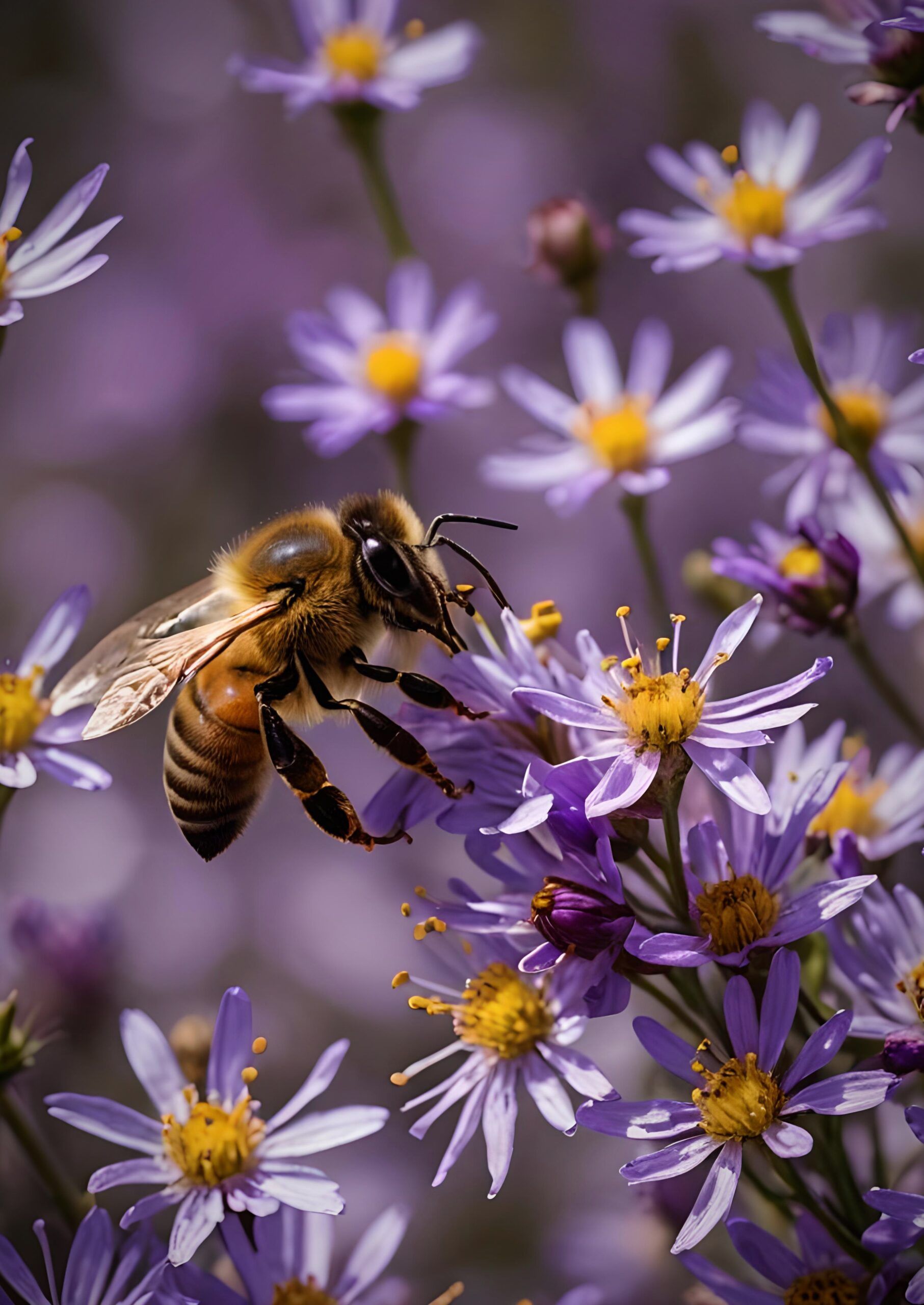
A honey bee colony does not store honey without a reason. The reserves kept in the combs sustain thousands of bees throughout the year, providing the energy they need to fly, work inside the hive, raise brood and maintain the temperatures necessary for the colony's survival. Even building new combs requires considerable energy, as wax production itself involves a substantial consumption of sugars.
But how much honey are we actually talking about? There is no single answer, because a colony's nutritional requirements change continuously throughout the year. A colony in the middle of spring, with large amounts of brood and tens of thousands of individuals, has very different needs from the same colony in the depths of winter. Its population, flight activity, number of larvae to feed, amount of wax to produce and energy requirements all change with the seasons.
Honey, but not only honey
Honey is primarily a reserve of carbohydrates and therefore one of the colony's main sources of energy. Bees use sugars to fuel their flight and the countless activities they perform both inside and outside the hive, but their diet is not limited to honey. Pollen provides proteins, fats and other essential nutrients, particularly during brood rearing, while water is also collected and used according to the colony's needs.
It is precisely the colony's life cycle that makes its consumption so variable. As spring begins, the bee population increases rapidly, along with the amount of brood that needs to be raised. Foragers must fly for kilometres in search of nectar, pollen and water, nurse bees must feed the larvae, and suitable conditions must be maintained inside the hive for brood development. By late summer and throughout autumn, these requirements begin to change again, until winter arrives and outdoor activity is drastically reduced, although honey consumption never stops entirely.
How much energy does a colony consume?
The quantities involved are considerably greater than the size of an individual bee might suggest. Estimates reported in scientific literature vary depending on environmental conditions, colony strength and activity, but they nevertheless indicate that annual consumption can amount to tens of kilograms of honey. A widely cited estimate for a colony in a temperate climate is approximately 60 kilograms per year, while other studies report even higher requirements.
This figure may come as a surprise, because what we usually see is the honey that the beekeeper can harvest at the end of the season. Yet that represents only the surplus the colony has managed to accumulate beyond what it has already consumed to survive and what it must retain for periods when external resources will be insufficient.
Much of the energy collected during the season, therefore, will never end up in a jar. It will already have been used by the bees to sustain the complex biological system we call a colony.
Building honeycombs also requires honey
One of the less obvious uses of this energy is the production of beeswax. Worker bees secrete wax through specialised glands and use it to build the combs in which new bees are raised and honey and pollen are stored. These structures are essential to colony life, but constructing them comes at a considerable energetic cost.
Estimates vary, but the scale of consumption is remarkable. According to the FAO, producing one kilogram of beeswax can require approximately 8 to 15 kilograms of honey. In other words, producing just one hundred grams of wax may involve an estimated consumption of around 0.8–1.5 kilograms of honey.
Of course, this should not be understood as a simple, direct conversion of eight or ten kilograms of honey into one kilogram of wax: it is an estimate of the energetic cost borne by the colony during production. Nevertheless, it helps us understand just how demanding comb construction can be and why bees do not produce wax unnecessarily.
It also explains an important aspect of beekeeping: preserving and reusing combs that are still in good condition provides the colony with an existing structure, reducing the energy it would otherwise need to invest in building new ones.
And what happens during winter?
With the arrival of colder weather, activity inside the hive changes considerably, but honey bees do not hibernate. As temperatures fall, they gradually gather into a winter cluster (known in Italian as glomere), using energy to maintain conditions within it that allow the colony to survive. One of the sources of that energy is the honey stored in the combs.
There is no single quantity of winter stores that is suitable for every hive or every geographical area. As a general reference, the Italian beekeeping association UNAAPI indicates approximately 15–25 kilograms of stores, depending on the region, as an amount that may allow a colony to survive the winter. This is a guideline rather than a formula to be applied mechanically: colony strength, weather conditions, the duration of periods without forage and the timing of renewed brood rearing must all be taken into account.
The end of winter can, in fact, be a particularly delicate period. As brood rearing resumes, the colony's nutritional and energy requirements increase again, while the reserves accumulated during the previous year have gradually diminished. If poor weather prevents foragers from leaving the hive, or the first flowering plants are not yet providing sufficient resources, a colony that has successfully survived the coldest months may suddenly find itself in difficulty.
The honey that remains in the hive
This is where a question about bee biology becomes directly relevant to the beekeeper's work. At the end of the season, it is not enough simply to assess how much honey has been produced: we must also evaluate what remains in the brood chamber and whether those reserves will be sufficient to sustain the colony through the months ahead.
At Le Terre dei Maghi, we prefer our colonies to enter winter with generous stores. The honey present in the hive is therefore not regarded simply as something that could potentially be harvested: part of those reserves belongs to the colony's natural cycle and must continue to fulfil the purpose for which the bees accumulated them.
In our case, this approach is also consistent with the principles of organic beekeeping. European organic production regulations require that sufficient stores of honey and pollen be left in hives at the end of the production season to enable bees to survive the winter. Feeding colonies is permitted when their survival is endangered by climatic conditions.
Naturally, this does not mean that intervention will never be necessary. A particularly difficult season, a prolonged shortage of forage or consumption exceeding expectations may make emergency feeding essential. The point is that decisions about harvesting honey cannot be made without simultaneously considering the needs of the colony.
A pantry built throughout the year
There is therefore no single number that can answer the question “How much do bees eat?” A colony consumes substantial amounts of energy in different ways: to fly and forage, raise thousands of new bees, maintain suitable temperatures and build honeycombs. During periods when nectar is unavailable, it survives thanks to the reserves accumulated over the preceding months.
The honey left inside the hive is therefore much more than simply what the beekeeper has not harvested. It is a pantry built by the bees during periods of abundance, providing one of the essential conditions that will allow the colony to survive winter, reach the following spring and begin its life cycle once again.